





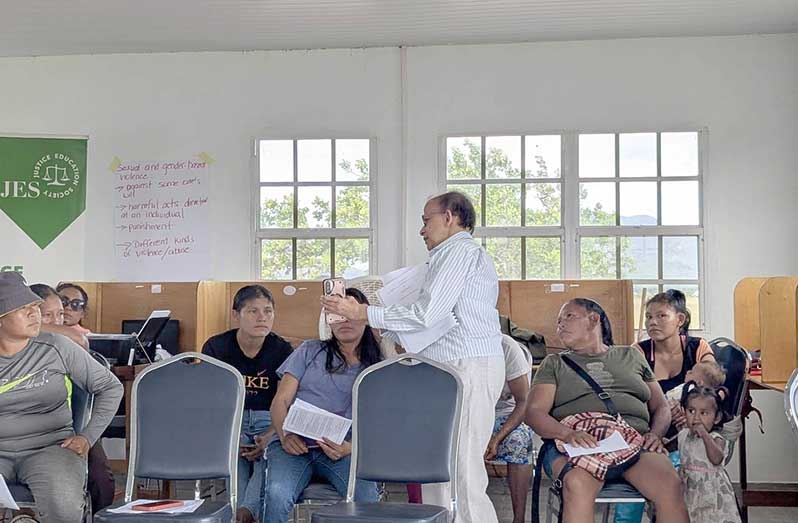
MORE than 100 women from several South Rupununi communities have received guidance on how to report serious criminal offences, following a series of outreach meetings hosted by the Office of the Director of Public Prosecutions (DPP).
The sessions were held between February 10 and 13 in the Region Nine villages of Potarinau, Shulinab, Meriwau, Quiko and Parabara, and focused on procedures for reporting crimes such as murder, sexual offences and domestic violence.
According to the DPP’s Chambers, the outreach was organised in response to complaints indicating that some residents were uncertain about how criminal matters should be handled, particularly cases involving gender-based and sexual violence.
During discussions, participants indicated that many community members were unaware that village leaders, including Toshaos, do not have the legal authority to resolve criminal offences such as sexual assault or domestic violence. Officials also noted that allegations have surfaced in some communities that attempts were made to settle such matters informally rather than through the formal justice system.
The meetings sought to clarify the role of law enforcement and emphasised the importance of reporting serious offences directly to the police.
The outreach also included participation from the Canadian Justice Education Society (JES), which facilitated arts and culture sessions aimed at encouraging discussion on preventing gender and sexual violence. Participants used drawings and group activities to express concerns affecting men, women and children in their communities.
Representatives from local organisations, including the South Rupununi Wapichan Wiizi Women’s Movement, said the engagements helped to improve understanding of available legal processes among residents in remote areas.
The DPP’s Chambers said similar public education initiatives may continue as part of efforts to improve access to justice information in hinterland communities.





