






– Deputy Speaker Mahadeo defends programme during budget debate
DEPUTY Speaker and Director General of the Ministry of Health, Dr. Vishwa Mahadeo, during his Budget 2026 presentation, cleared the air about telemedicine’s potential in Guyana in direct response to one of the two health shadow ministers from the opposite side of the House.
“Mr Speaker, I’d like to turn to Health. The honourable member who spoke in a disparaging way about telemedicine — that gentleman doesn’t have a clue about telemedicine. I’m glad the honourable member came back in, but he missed the part where I spoke about doing proper research and not being afraid to read, no matter how many pages you have to read,” Dr Mahadeo said.
He went on to provide statistics on what telemedicine has achieved from 2022 to February of this year, noting that telemedicine was introduced in 2022 under the vision of President Dr Irfaan Ali and Minister of Health, Dr Frank Anthony, as a novel initiative. At the time, many persons were skeptical about its value and whether it could be effectively used in Guyana.
The Director General revealed that from 2022 to February, the number of telemedicine sites increased from four in 2022 to 130 by the end of February. He added that the Honourable Minister, Dr Frank Anthony, has assured that this number will increase to 150 by the end of this year under the 2026 Budget.
Additionally, over the last year, 15,000 persons accessed facilities equipped with telemedicine. A total of 6,363 patients used the telemedicine systems, and 1,293 video consultations were conducted.
“Let me explain a bit, Mr Speaker. There is internet connectivity and video connectivity, and some sites have ECG and ultrasound services. They can check your heart and provide patient monitoring, so the doctor who sits in Georgetown or at a regional hospital, or the specialist, can see the patients, communicate with them, and advise what to do next,” Dr Mahadeo explained.
He added that 250 referrals were made, 501 serious cases were managed at the telemedicine sites themselves, and 34 medical evacuations were conducted. A total of 159 mothers received care through telemedicine, 515 babies were treated, 533 chronic disease patients received care, and six mental health patients were assisted through the system.
“All the telemedicine sites are not only used by doctors for consultations but also for training, monitoring, evaluation, and reporting.”
The Ministry of Health conducts monthly meetings with all telemedicine sites and Ministry of Health staff. Staff from the Ministries of Local Government and Amerindian Affairs also participate, along with village Toshaos, village representatives, and other councillors who are interested. The discussions extend beyond health matters to include issues for which villages may require assistance, with solutions determined collectively during these meetings.
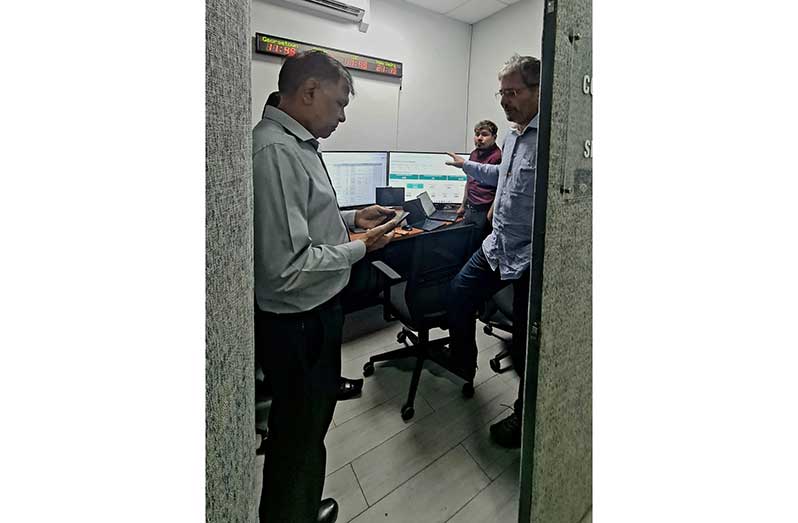
“Mr Speaker, today our telemedicine hub in the Ministry of Health is a place where persons from international organisations and other countries can come to model our system, and that’s what telemedicine is — a model for others,” Dr Mahadeo told the National Assembly.
Most telemedicine sites are located in Regions Seven, Eight, and Nine, while additional sites are also operating in Regions Four, Six, and Ten, where riverain and hinterland communities are present.




