A black history month lesson for all readers
OUR journey begins with the Roman quest to master the new worlds of the Khemetic realms (Egypt, Nubia and Kush), and Rome had sent its best, knowing not what they would confront. Emperor Augustus was confronted at one stage by the Ethiopians, who had raided towns that Rome had regained. The Romans then entered the borders of KUSH, but witnessing this, the Kushites invited the Romans to give audience before the Kandake [queen] – ‘Amanishakheto’, to question whether there would be war or common interests between Rome and KUSH.
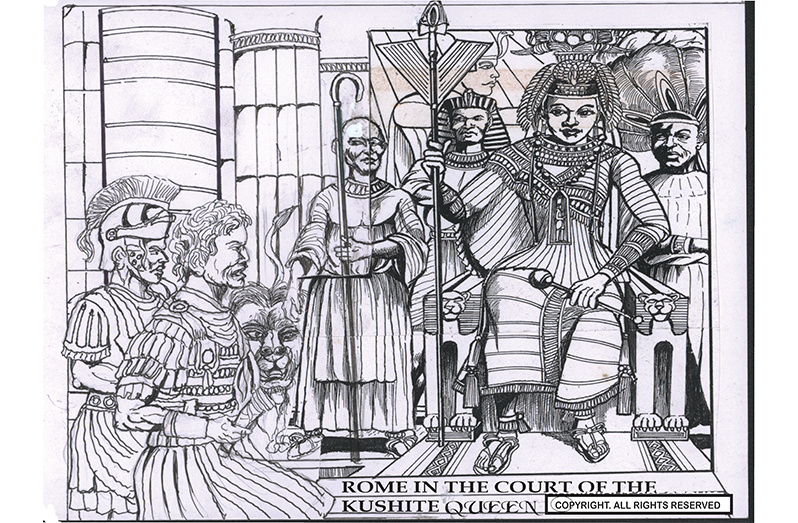
Records have not been discovered to state that statues of Kushite royalty or gods were included; however, Maximinus Daia [Rome’s Caesar of the Orient 305–313] had established good relations with the KUSHITES. The Kandake did respond to Rome’s request for an amicable relationship, with both kingdoms benefitting. Rome’s request included Meroitic participation in the ISIS mystery at Philae. Thus, the rituals that enveloped the gods of that time embodied collaboration rather than outright war.
In our time, in 1806, Napoleon Bonaparte took the Quadriga from the Brandenburg Gate in BERLIN. This act followed a continuous grievance into WWI and WWII. What is obvious is that art, when its expression embodies the character of a nation, can evolve into an influential being of its own worth, sometimes compelling.
Today, there have been humane acts of returning works of art taken during the age of colonisation to African nations, fostering a glow of new understanding upon glancing back at the past and bridging the future through a new dialogue and a new vision to consider.
I have covered over the past years the phenomenon of art, even in the eyes of an artist turned dictator: the art collected for destruction by Adolf Hitler, which he and his followers determined as inferior art, and thus, of inferior people, during his reign. Yet when the ‘Third Reich’ folded, much later, these paintings, in our time, were found not destroyed as was intended and believed to have perished; they were concealed in so-called respectable locations, intact.
Thus, words are spoken to sustain perspectives of vexations, whether good or evil, but founded on the fallacies of the day, of fictions to suffice greater and more grim indulgences. If you have read this article and are awakened to the functions of human interaction to the value of the painted, sculpted or written arts, use your search engines after you have interrogated the library on the quarrels of stolen arts recorded, especially from the tombs of the royal dead of the ancient world, particularly the African and South American realms, and you will be much wiser when you explore and see our world and those value systems, and why the past is also important.
This article revolves around the concept of rising beyond the mundane to find common purposes with one’s talents—talents that can enable us to navigate the changes of the times.