






—to continue expansion of social safety nets, acceleration of human capital development
FULLY financed, with no new taxes and a sharp focus on development and fiscal responsibility, the 2026 $1.558 trillion budget secured parliamentary approval in the wee hours of the morning on Saturday.
After days of scrutiny in the Committee of Supply and heated debates, the fiscal package, which is 12.7 per cent larger than the 2025 budget, was passed during the third sitting of the 13th Parliament.
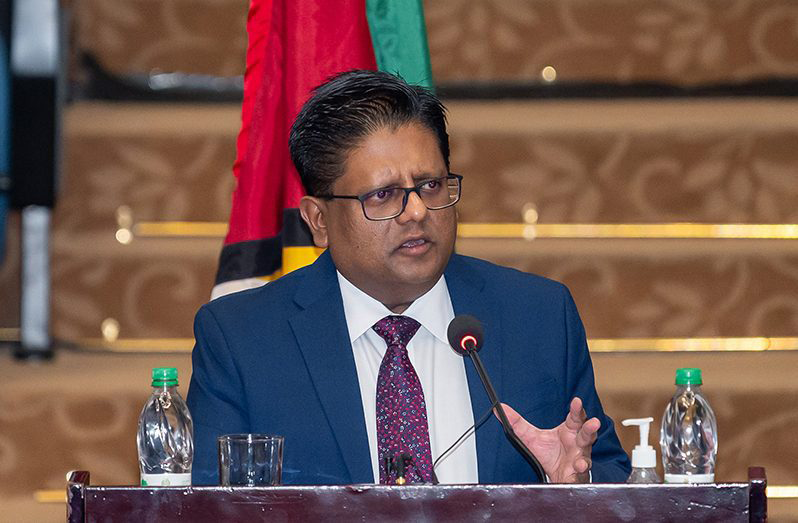
Senior Minister in the Office of the President with Responsibility for Finance, Dr Ashni Singh said Guyana’s economy will continue to grow by extraordinary rates.
“Budget 2026 will see us continuing to invest in the things that matter for the long-term viability and competitiveness of our economy, including infrastructure that is so critical to catalyse strong long-term economic growth, transport infrastructure, energy infrastructure, etc,” Dr. Singh said.
The government, he defended, has emphasised its comprehensive vision for economic growth, including infrastructure and social sector investments, aiming for world-class services.
“…And Budget 2026 will see us investing in the social sector at a rate that will ensure that the quality of social services delivered to the Guyanese people achieves a standard that will equate to world class. We have spoken of world-class healthcare, world-class education. We have spoken of the deployment of technology-based solutions so Guyanese citizens will live, finally, Sir, in a truly modern society, and in a truly modern Guyana,” he told the House.
The Finance Minister also highlighted the parliamentary opposition’s failure to endorse key budget measures in this year’s budget, underscoring a perceived lack of concern for the people of Guyana.
Under the theme, “Putting People First”, key plans of this year’s fiscal package include plans for Special Development Zones with fiscal incentives intended to attract investment into strategically selected locations.
This will complement anticipated reductions in electricity costs that are expected to significantly improve the competitiveness of manufacturing operations when the flagship Gas-to-Energy (GtE) project comes on stream.
In addition to this, the 2026 budget makes provisions for the removal of corporate taxes on agriculture and agro-processing, which is expected to free-up resources for reinvestment.
The fiscal package also creates space for the expansion of export allowances to include value-added forestry products, and the removal of VAT on locally made furniture and jewellery.
COST OF LIVING AND MORE DISPOSABLE INCOME
To ease cost-of-living pressures, the government will maintain the zero per cent excise tax on fuel, a measure in place since 2022, which has helped shield households from global trends. Budget 2026 will also extend relief on freight charges used to calculate import taxes.
Meanwhile, an additional $9 billion has been set aside in 2026 for further cost-of-living support.
Assistance for children and the elderly will also be expanded, with the Because We Care grant increasing to $60,000 per child, the introduction of a $20,000 annual transportation grant for schoolchildren, which, with the $5,000 uniform voucher will see each child receiving $85,000.
This will reflect an estimated $12.4 billion being transferred to parents under the education grant programme.
Support will also continue to cover examination fees for Caribbean Secondary Education Certificate (CSEC) and Caribbean Advanced Proficiency Examination (CAPE) benefitting some 14,000 students.
The elderly will see an increase in old-age pension to $46,000 per month, and benefit from an annual transportation grant of $20,000 providing an additional injection of $1.9 billion in support.
Measures to raise disposable income include higher stipends for community-based workers, the return of the $100,000 national cash grant for adults aged 18 and above, the removal of net property tax on individuals, and an increase in the income-tax threshold to $140,000 per month.
While the controversial We Invest in Nationhood (WIN) Opposition Leader, United States-indicted businessman Azruddin Mohamed was notably absent, the Opposition’s Chief Whip, Tabitha Sarbo-Halley contended that while she believes this year’s fiscal measures were marginal, acknowledged that the government had made “some movement”, and an “attempt to deal with some of the issues that the country and the people face”.
A key feature of the budget is an adjustment to the income-tax threshold, which the Opposition Chief Whip conceded would “give a few more dollars in the pockets of persons”.




