






-pumps activated, sluices opened, blockages cleared as ‘agri’ ministry, NDIA take action
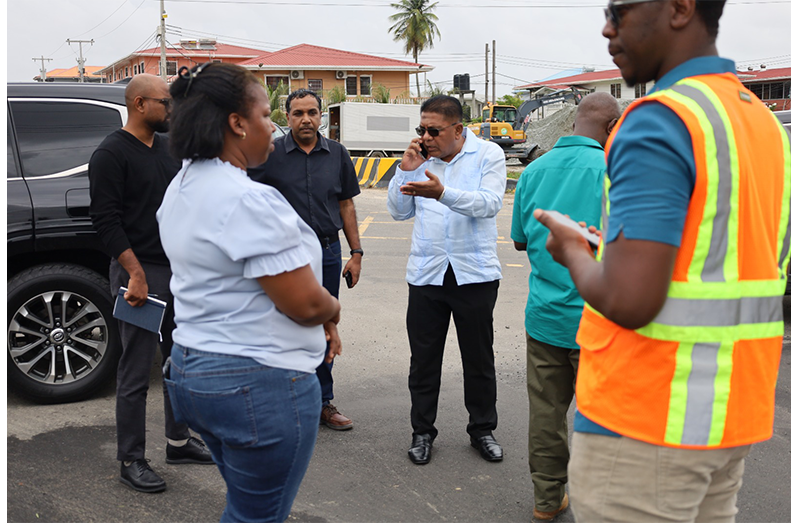
IN less than four hours, Guyana recorded nearly four inches of heavy rainfall, primarily along the coastal belt. As water pooled in several low-lying communities, teams from the Ministry of Agriculture and the National Drainage and Irrigation Authority (NDIA) were already deployed, activating pumps, monitoring sluices, and clearing blockages to accelerate drainage.
Speaking from the field, Agriculture Minister Zulfikar Mustapha assured the public that the country’s flood-control infrastructure remains fully operational, even as intense rainfall resulted in temporary water accumulation in vulnerable areas such as Lodge, Queenstown and Sophia.
Meanwhile, the Guyana Hydrometeorological Service (Hydromet) has issued a flood advisory for Regions Two and Three, warning of continued moderate to heavy showers, reduced visibility and the possibility of water build-up in flood-prone communities.
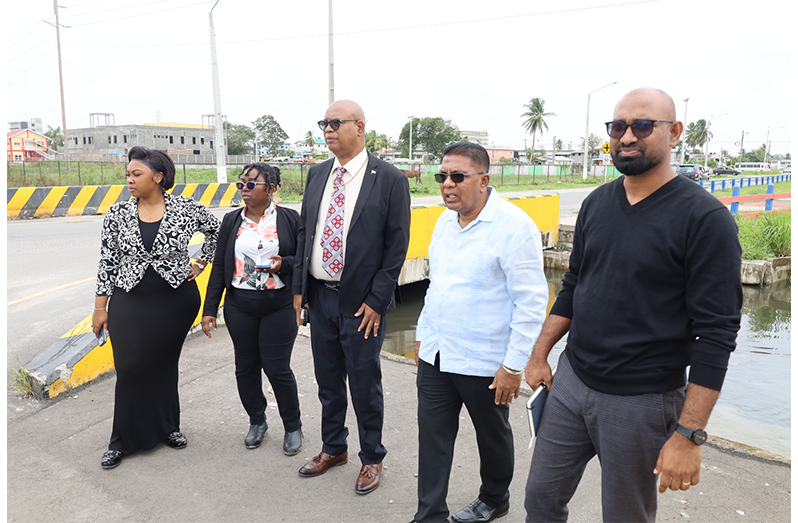
Minister Mustapha explained that despite the unusually high volume of rainfall within a short period, the drainage systems functioned as designed. “Within less than four hours, you had a maximum of about four inches of rainfall. The average is between 3.5 to four inches of rainfall. All the systems are in place. The pumps are operable. The 12 pumps that we have in operation. And the sluice systems are operable.”
He acknowledged that while the infrastructure is functioning, some communities experienced slower drainage due primarily to blockages. According to the minister, these obstructions remain a significant contributor to flooding in certain areas. “Some areas are under water because there are blockages and contractors executing contracts would have put materials and cofferdams.”
To address this, the ministry has adopted a coordinated response, with NDIA teams working continuously on the ground to identify and remove blockages to water flow. The effort also involved collaboration with the Ministry of Public Works to tackle drainage challenges linked to ongoing infrastructure projects.
“I have NDIA personnel on the ground, and I also spoke to the Minister of Public Works. His team is looking at that to ensure they clear those blockages,” he said. “My team, led by Lionel Wordsworth Head of NDIA, has been moving and checking these places to ensure we clear all encumbrances so that we can have free flow of water. The water has already receded tremendously in most of the areas that were under water.”
Communities such as Cummings Lodge, Queenstown, and Sophia were among the areas most affected. These locations, characterised by their low elevation, remain particularly susceptible during periods of intense rainfall.
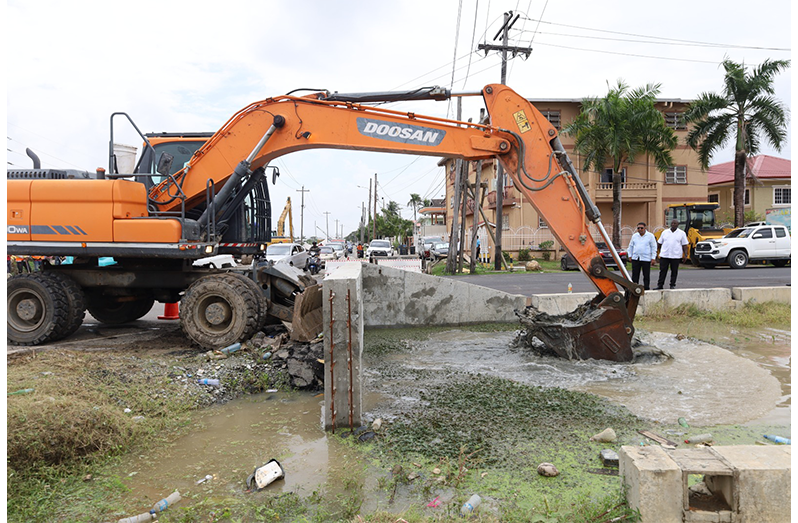
Minister Mustapha noted that these communities are currently priority areas for monitoring and intervention. “The low-lying, flood-prone areas such as Lodge, some areas in Queenstown and around Sophia are of concern. I am hoping that the blockages can be cleared so the pumps and sluices can drain the water effectively and quickly,” he said adding, “All in all, the systems are working and we hope we can have the cooperation of persons executing contracts and doing civil works so that we can get free flow of water throughout the town.”
Hydromet’s advisory, issued early Thursday, underscores the likelihood of continued rainfall, particularly in Regions Two and Three. The agency cautioned motorists and residents about reduced visibility and potential water accumulation in susceptible areas.
Despite the advisory, Minister Mustapha expressed confidence in the resilience of the country’s drainage network. He emphasised that temporary flooding in low-lying areas is not uncommon during high-intensity rainfall events but assured that systems are in place to manage the runoff efficiently. “Because of the amount of rainfall, low-lying areas will see water accumulate over time, but I am sure it will be drained off.”
As rainfall patterns grow increasingly unpredictable, the coordinated response by the Agriculture Ministry, NDIA and Public Works underscores an ongoing commitment to strengthening flood management and ensuring that drainage systems remain responsive under pressure.




