By Indrawattie Natram
REGION Two continues to bolster its drainage and irrigation capacity with a comprehensive network of pumps, sluices, and self-acting flap gates designed to safeguard communities from flooding, particularly during periods of intense rainfall and high tides.
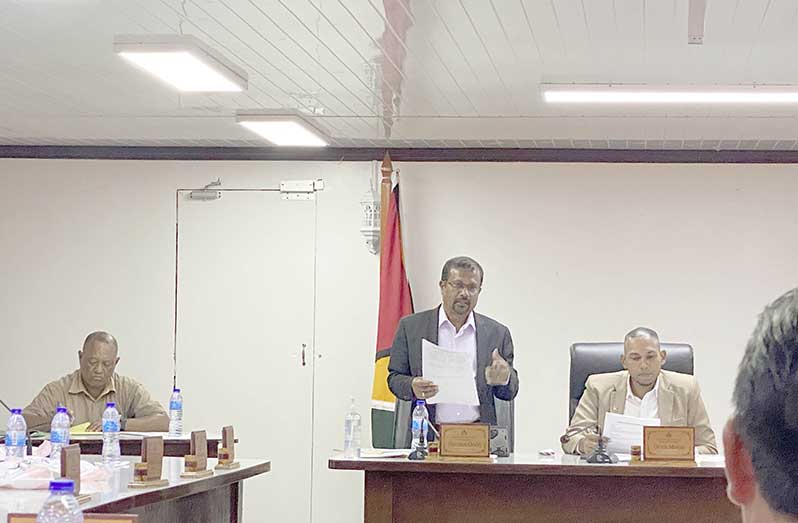
During a recent meeting of the Regional Democratic Council (RDC), Regional Vice-Chairman Humace Oodit provided an update on the region’s drainage infrastructure, highlighting the systems currently in place to mitigate flood risks, and ensure efficient water management.
Vice-Chairman Oodit disclosed that the region is equipped with 24 drainage pumps strategically positioned across vulnerable and low-lying communities. These pumps are located at Pomp, Cozier, Andrew’s, Lima, Hampton Court, La Union, Dawa, and Three Friends among other areas. The placement of these pumps is based on historical flooding patterns and the need for rapid response in communities prone to water accumulation.
He explained that the pumps play a vital role in accelerating the discharge of excess water during heavy rainfall, especially when kokers (sluice doors) cannot be opened due to high tide levels. This mechanical support ensures that water is removed from farmlands and residential areas in a timely manner, reducing damage to homes, crops, and infrastructure.
In addition to the pumping stations, the Essequibo Coast is supported by an extensive network of 25 sluices and self-acting flap gates stretching from Adventure to Supenaam. These structures are critical to regulating water flow from the inland drainage canals to the Atlantic Ocean. The self-acting flap gates are designed to automatically close during high tides to prevent seawater from flowing back into the drainage system, while allowing water to discharge when the tide recedes.
Within the David James Scheme, four major drainage structures are in place to manage water flow from the Pomeroon River. These installations are particularly important given the river’s influence on surrounding agricultural lands and settlements. Proper management of riverine water levels helps protect rice fields, cash crops, and livestock operations that are vital to the region’s economy.
Vice-Chairman Oodit emphasised that, in total, Region Two is supported by 26 sluices, all contributing significantly to the region’s overall drainage capacity. He noted that regular maintenance and monitoring of these structures remain a priority to ensure optimal performance year-round.
He further stressed that drainage and irrigation remain critical pillars of development for Region Two, which relies heavily on agriculture. With climate change contributing to unpredictable weather patterns and increased rainfall intensity, strengthening drainage infrastructure is essential to protecting livelihoods and maintaining economic stability.
The regional administration continues to work closely with the National Drainage and Irrigation Authority (NDIA) and other relevant agencies to ensure that pumps, sluices, and ancillary systems remain functional and responsive.
Regional Chairman Devin Mohan said the investment and ongoing maintenance of these systems reflect a proactive approach by the Region Two administration to reduce flooding risks, enhance resilience, and safeguard communities along the Essequibo Coast.