






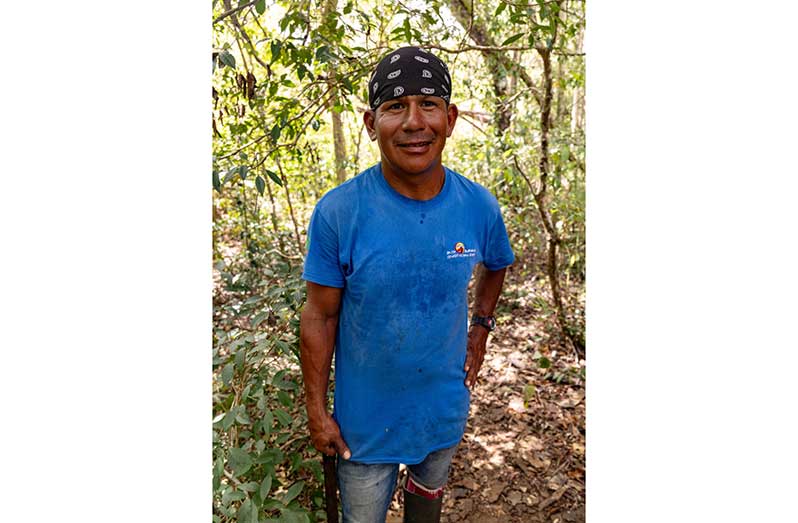
ORGANISED cattle-rustling gangs operating in the South Rupununi are being blamed for the brutal killing of well-known local guide and conservationist Leon Baird, called “Rasta,” as growing concern mounts over what residents describe as a troubling lack of progress in the investigation.
In a statement issued on Saturday, Visit Rupununi said the killing, which occurred in the South Rupununi savannah near Sand Creek, bears the hallmarks of criminal networks that have long plagued the region.
“We are deeply disturbed and outraged by the brutal killing of Leon Baird,” the organisation said, noting that based on reports from the area and evidence observed at the scene, the murder is widely believed to have been carried out by cattle rustlers active in the Sand Creek area.
Baird was described as a respected vaquero, local guide and conservationist who dedicated his life to protecting the land, wildlife, and sustainable development of the Rupununi. His death has sent shockwaves across the region, where he was regarded as a trusted mentor and community figure.
According to the statement, cattle rustling in the South Rupununi has for years been carried out by organised groups well known within the district, with repeated reports made to the authorities.
These activities, Visit Rupununi said, have had serious and ongoing impacts on ranches, villages, and families.
“Despite formal reports made over a prolonged period, these crimes have continued, leaving many in the region feeling exposed and unprotected,” the organisation stated.
Concern has intensified which marked one week since Baird’s body was discovered, with little visible progress reported in the investigation. Several days had lapsed before the police issued an official statement on the crime.
Visit Rupununi said there have been sightings of suspects, witnesses have come forward, and physical evidence remains at the crime scene that has not yet been collected.
The organisation further claimed that the lead investigator has not been seen in the district since last Sunday, and that no suspects are known to have been formally questioned.
“This lack of visible progress is deeply concerning,” the statement said, warning that delays risk undermining public confidence and emboldening criminal activities.
Calling for urgent intervention by national authorities, Visit Rupununi stressed that the case goes beyond the killing of one individual.
“This is not only about one man. It is about safety, accountability, and the rule of law,” the organisation said. “Justice delayed is justice denied—not only for Leon and his family, but for the entire region.”
The group cautioned that failure to decisively address the killing could contribute to further violence, arguing that long-standing gaps in responding to reported criminal activities may have created conditions where such an atrocity could occur.
“The killing of Leon Baird was an atrocity. It demands a transparent, professional investigation and a clear commitment from law enforcement and national authorities to uphold justice,” the statement added.
Visit Rupununi said the people of the Rupununi deserve decisive action and accountability, as the region continues to mourn the loss of a man whose work and character helped shape a more hopeful future for the communities he served.
The 38-year-old tour guide’s partially charred remains were discovered along the eastern bank of the Rupununi River near Wichabai Ranch, South Rupununi.
His remains were found on Sunday, January 25, after police were alerted to a burnt vehicle in the area. Investigators said what appeared to be a partially burnt human body was found inside the vehicle.
The remains were removed from the scene and transported to the Lethem Regional Hospital, where a doctor on duty pronounced the man dead.
A post-mortem examination conducted on Tuesday, January 27, by Government Pathologist, Dr Nehaul Singh, determined that Baird died from burns and indicated that he was alive at the time the fire occurred. Following the examination, the body was released to relatives for burial. DNA samples were also collected as part of the ongoing investigation.
The police said further enquiries in the surrounding area led to the discovery of the remains of two cattle nearby, which investigators suspect were shot. Several items of evidential value, including a knife and spent shotgun shells were recovered and lodged for examination.
No arrests have been made so far, and the police said investigations are continuing as efforts intensify to determine the circumstances surrounding the incident.




