
The Quiet Resilience of ‘Uncle Lalah’
RAMNARINE Ramkishore is not a man of grand certainties. Life, he says, has taught him that too much can change without warning. Yet, on one matter, he remains unwavering: farming is not simply what he does, it is who he is.
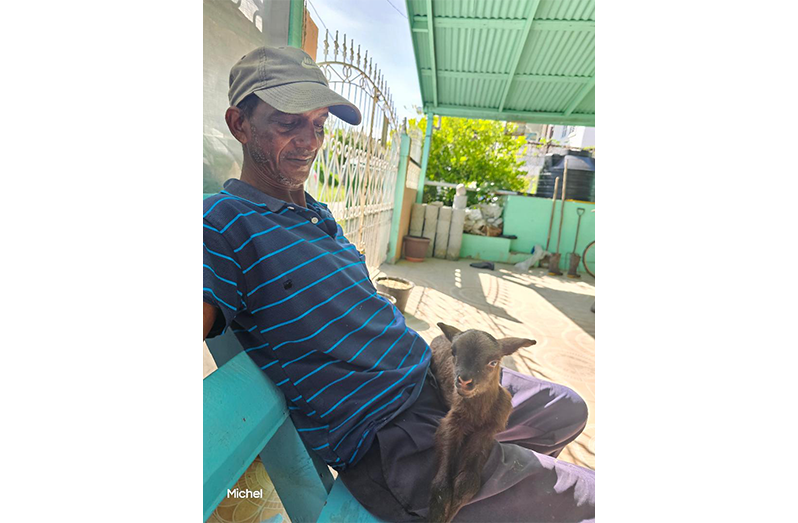
At 56, the cattle and cash-crop farmer of Temple Street, Windsor Forest, West Coast Demerara, affectionately known throughout the village as “Uncle Lalah,” embodies a way of life shaped by land, livestock and perseverance. Born into a farming family, Ramkishore was raised in an environment where rearing animals and working the soil were not choices but necessities—the sole means through which his household survived.
For more than three decades, he has remained rooted in agriculture, even as that livelihood has been repeatedly threatened. Once the owner of a herd of about 50 cattle, Ramkishore witnessed his numbers dwindle to just 36 creole-breed cows, most of them untamed and roaming semi-wild in the backlands pasture. Praedial larceny has been the most devastating blow. Cows were stolen from the pasture, gradually eroding what he had built over years of labour.
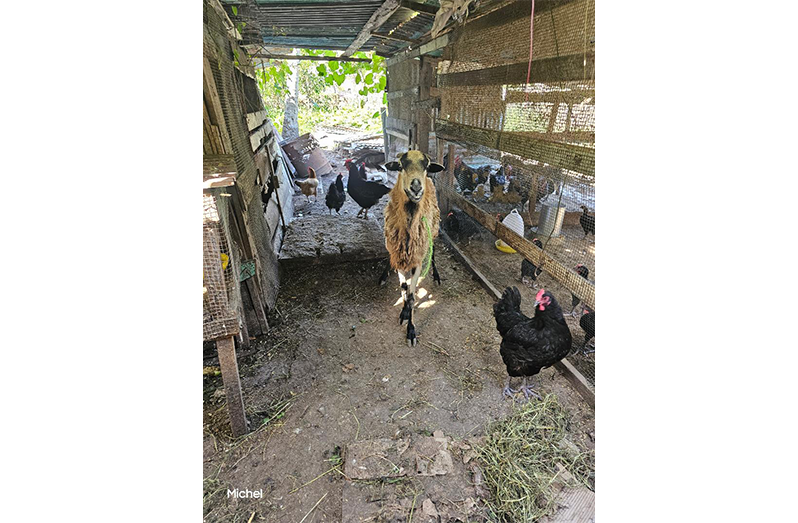
His losses did not stop there. Ramkishore also keeps small ruminants—sheep and goats—but thieves showed no mercy. Animals were taken, sometimes in broad daylight. Of the 10 sheep stolen, he has managed to retain only a few, along with a newborn lamb and one animal he recently purchased. Plans are now underway to construct an elevated pen in his backyard to better secure his sheep and goats.
Despite these setbacks, Ramkishore continues to rear cattle for both milk and beef production. Traditionally, he would sell a cow annually for Eid-ul-Adha, a practice that provided a modest but reliable source of income. In earlier years, he rode daily to sell fresh cow’s milk in the community. Today, after the theft of most of his milking cows, only one remains productive, though several calves have recently been born in the pasture—small signs of renewal amid loss.
What makes Ramkishore’s story particularly compelling is that his labour is carried out under physical constraint. Living with a disability—one of his legs no longer functions as it should—he nonetheless insists on earning an honest living through farming. His condition traces back to years of work in neighbouring rice fields, where he undertook various tasks, including spraying. Prolonged exposure to agricultural chemicals, often without adequate protective gear, left him ill and resulted in lasting injury.
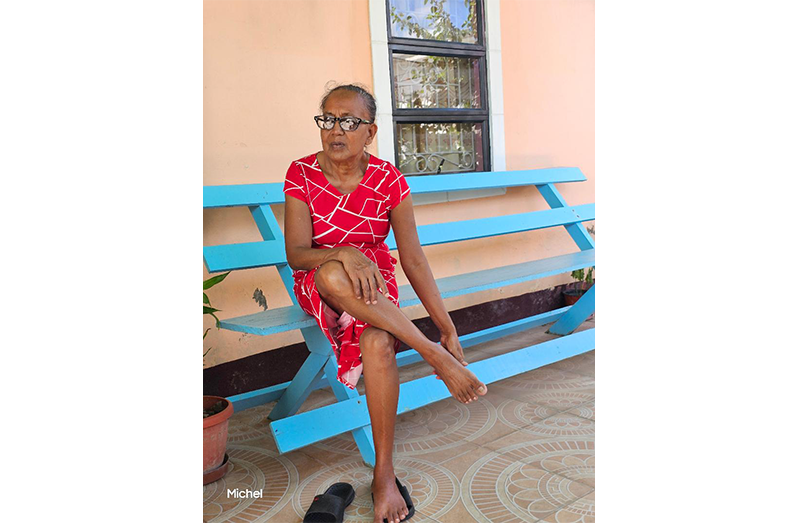
Unable to perform the most strenuous forms of manual labour, he redirected his efforts towards ruminant rearing and cash-crop cultivation, areas where his life-long familiarity with animals and plants could still sustain him. Together with his wife, Rayoutie Nandreballi, Ramkishore operates a small but productive cash-crop farm on an empty plot within the village. For the past 30 years, the couple has worked as a team cultivating vegetables, milking cows and transporting their produce to the Leonora Market every Friday.
They take pride in using minimal chemicals, a choice shaped by both health experience and principle. The income, though modest, supports their household and affirms their independence.
Institutional support has played a limited but meaningful role in sustaining his efforts. Ramkishore has benefitted from the building materials provided by the Guyana Livestock Development Authority (GLDA) to construct a cow pen. While extension visits are not always consistent, he values technical guidance when it is available. In particular, he speaks with gratitude of the GLDA’s Region Three Extension Officer, Mr Prakash, whose regular visits and advice were instrumental in helping him access resources and improve animal care.
More recently, Ramkishore received black giant chickens and constructed a pen to rear them before transitioning to a free-range system. Yet challenges persist. He needs a ram to improve the genetics of his small ruminants and, like many farmers, looks forward to participating in the national animal genetic improvement programme for both cattle and sheep. He views the initiative as an important intervention, one that could help farmers with special needs rebuild livestock systems crippled by theft and limited capital.
“Cattle and sheep production is not for the faint-hearted,” Ramkishore reflects. Praedial larceny, rising costs and the physical demands of farming make survival increasingly difficult. There are no days off, no fixed hours; farming is a 24-hour responsibility, extending into nights and early mornings. Still, it is the only life he knows, and the only one he wishes to pursue.
To ease his workload, especially given his disability, Ramkishore hopes to access a tiller to assist with land preparation for his cash crops. Such support, he believes, would allow him to remain productive and self-reliant despite physical limitations.
Simple in manner but steadfast in spirit, “Uncle Lalah” continues to rise each day to tend animals and crops, determined to endure despite repeated losses. His story is not merely one of hardship, but of quiet resilience—a testament to the enduring role of small farmers in Guyana’s food system, and to the human capacity to adapt, persist and find dignity in honest work.