





SBB’s Deputy Chief Executive Officer on money management, access to finance and why financial literacy could be the key to a successful business
IN a business environment where many entrepreneurs learn by trial and error, financial literacy often determines which businesses survive and which ones struggle to grow. For Deputy Chief Executive Officer of the Small Business Bureau, Simon Pollard, understanding money management is not just a technical skill but a necessary foundation for small businesses hoping to evolve, remain compliant and access financing. From budgeting and taxation to reserves and financial planning, Pollard sat down with the Pepperpot Magazine this week to outline some helpful tips for small business owners in Guyana, how financial literacy could help you overcome the “guava season” and why equipping entrepreneurs with practical financial knowledge is now more critical than ever as Guyana continues its upward trajectory.
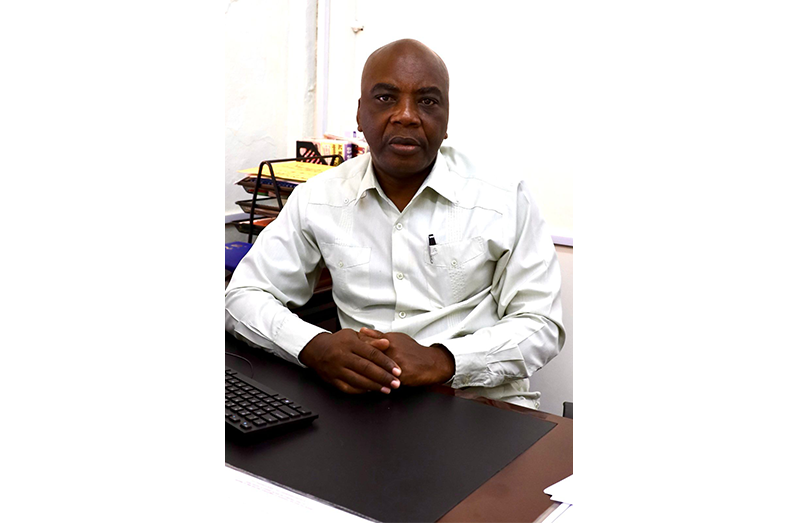
This year marks a decade since Simon Pollard, now Deputy Chief Executive Officer of the Small Business Bureau, first entered the Bureau. Today, he is one of the most well-known, go-to persons within Guyana’s business sector. After studying accounting at the University of Guyana, Pollard began his career as an accounting clerk, then taught for almost a decade before entering the corporate world as a finance officer at the Bureau. Today, his role has changed quite a bit, as he and his team work to fulfil a very impressive mandate to develop the business sector’s biggest player: small and medium-sized enterprises (SMEs). “At the Small Business Bureau, we are mandated to develop the small business sector in Guyana in accordance with the Small Business Act,” he said.
Pollard’s career has taken him to work in almost every facet of business, education, training, and finance, and throughout those years, there have been a number of persistent challenges within the small business sector here in Guyana and internationally, with the biggest being finance. There is a simple solution to accessing finance, however, financial literacy. Pollard says understanding finance is one of the key factors in an entrepreneur’s ability to access finance. “One of the things affecting small businesses globally is access to finance. Financial literacy is essential for small business owners and managers to ensure their businesses remain financially sound and operational. Financial literacy is being knowledgeable about money management and applying that knowledge to make sound financial decisions,” he shared. “As an entrepreneur, if you do not have this skill, it is one you must develop because it is what will keep you going. It allows you to adjust your methods and strategies, especially when accessing finance, which is often difficult for small businesses.”
Budgeting is a common term in and out of the business world, but Pollard says any successful business seeking to succeed should go a step beyond simply budgeting and practise financial planning. As he explained, while budgeting helps businesses plan shorter-term goals to ensure the business stays alive and afloat, financial planning assesses the business’s longer-term goals: new markets, expansion, and weaknesses. “Budgeting focuses on planned income and planned expenses. Many small business owners confuse budgeting with financial planning, but they are different. Budgeting is short-term, while financial planning is long-term,” he added. “Financial planning sets long-term financial goals over five to ten years, while budgeting deals with planning expenses for the next month, quarter, half-year, or year.” The two do go hand in hand, Pollard added. “Budgeting assists in financial planning because you budget to make a surplus, not a loss. That surplus is then allocated towards financial goals, reserves, and reinvestment into the business.”
Guyana is in the height of what many Guyanese have coined the ‘guava season’, that seemingly endless period after the holidays and before payday, when many people find themselves in a pinch. Accountants call this post-holiday cash shortfall, and this is why SMEs should create and utilise reserves and avoid practising drawings. In business, reserves are funds set aside for rough financial periods, while drawings refer to anything a business owner takes from the business for personal use, whether cash or goods. Many small businesses are hit particularly hard by this rough period and lack reserves, leading them to draw down. This practice, Pollard says, could be stifling businesses. “In business, reserves are funds set aside for specific events or activities. Having reserves keeps a business in line and prepares it for difficult periods, or guava season as they call it here in Guyana,” he said. “Drawings reduce business capital and limit growth opportunities. Business owners must separate themselves from the business entity. A business is a legal entity, and the owner is a separate person. Business owners should pay themselves a salary and stick to it once the business can support it, ensuring financial stability and growth.”
Taxation is also an area in which many small businesses struggle to find their footing. But according to Pollard, taxation for small businesses does not have to be complex, troublesome or seen as a threat to your business. “Many small businesses are unaware that taxes are based on profit, not income or sales. A business only begins paying taxes when its monthly profit exceeds $130,000. If a business owner has children under the age of 18, the tax threshold increases by $10,000 per child per month. With three children under 18, the threshold moves to $160,000 per month before any tax is payable,” he further noted. “However, even if a small business does not meet the tax threshold, it is legally required to submit an annual tax return. This ensures tax compliance and allows businesses to access tax compliance certificates when bidding for government opportunities.”
While there are countless other skills a business owner could learn in the field of financial literacy, Pollard emphasises that these simple steps could have a major impact on a business, especially in an economy as rapidly developing as this one. “Financial literacy is critical for small businesses to think outside the box and take advantage of opportunities. With Guyana’s economy poised for upward mobility, small business owners must be financially equipped to tap into emerging opportunities,” Pollard shared.
The Bureau is a leader in the growing number of organisations that could help kick-start businesses. “The Bureau provides business advisory services through trained business advisors who offer one-on-one guidance. Advice is free of charge, and business owners are not obligated to follow it. The Bureau also provides access to a resource centre, digital readiness training, labelling support and other capacity-building programmes to assist small businesses.” Business in Guyana is thriving more than ever, with more Guyanese stepping up to the mantle to innovate and create, and with financial literacy and a little consultancy, small entrepreneurs can ensure their businesses grow, develop, and expand.