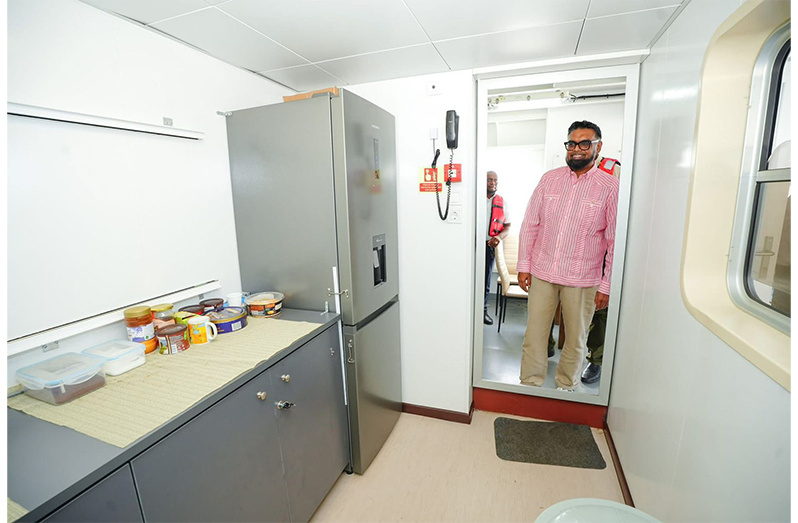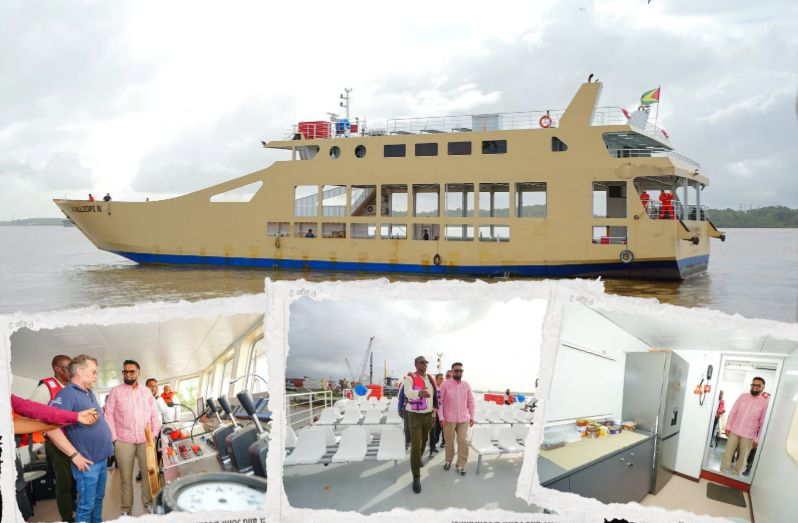
A newly acquired passenger vessel has arrived in Guyana, marking a major step in the government’s drive to modernise maritime transport and improve connectivity across the country.
The 2024‑built vessel, recently procured from Greece and soon to be renamed, sailed under its own power from the Mediterranean, rounding Cape Verde off the coast of Africa before crossing the Atlantic to Guyana.
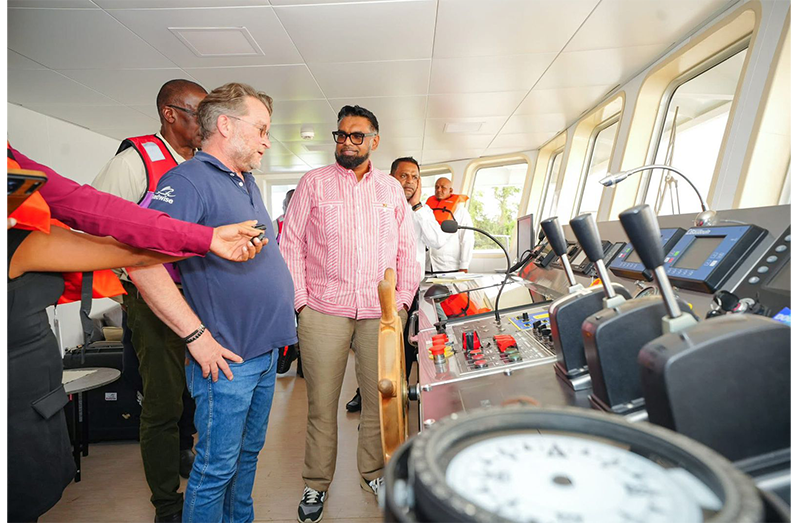
Speaking at the arrival and an inspection of the vessel on Wednesday, President Dr. Irfaan Ali described the ship as a key addition to the country’s national fleet, intended primarily to serve Region One, with plans also under way to source and refit another vessel for Region Seven.
Over the next few years, the government aims to replace older vessels to provide a more consistent level of service across all regions.
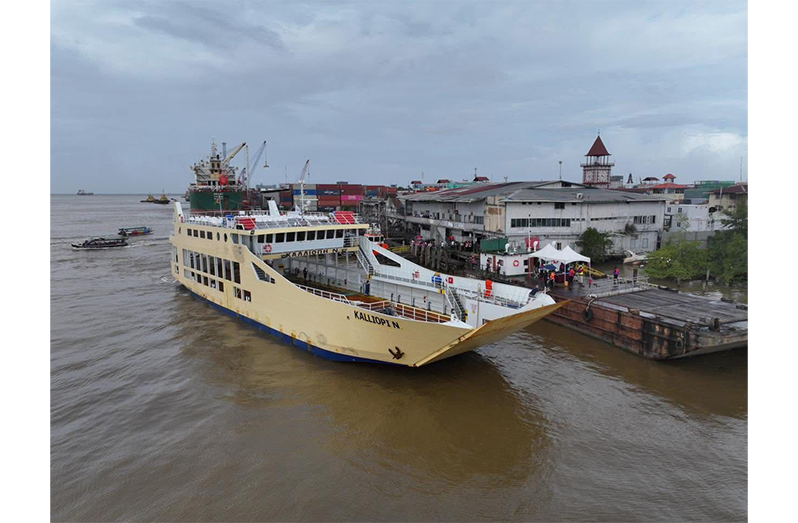
“We know region seven is asking about their new vessel, so we are in the process of redoing some other vessels that are available on the market, so we can have another vessel there. So incrementally, over the next few years, we’ll also be looking at replacing all the older vessel so we can have the same level of service in all the regions,” the President said.
Meanwhile, Guyana’s Minister of Public Utilities and Aviation, Deodat Indar said the vessel was identified after a global search led by the Maritime Administration.
It is equipped with three Hyundai engines and two generators, and currently offers seating for around 284 passengers.
It can transport up to 51 cars or the equivalent of 14 trucks, and operates at about 10 to 12 knots, significantly reducing travel time on the Georgetown–Region One route, particularly in calmer coastal waters.
The minister stressed that renewing the fleet is central to improving comfort, reliability and speed for passengers, and to accommodating the increasing number of trips for Region One and the Parika–Supernaam corridor.
Captain Stephen Thomas, Director General of the Maritime Administration Department (MARAD) outlined the extensive work carried out in Greece to prepare the vessel, which had previously operated on internal waters, for a transatlantic voyage.
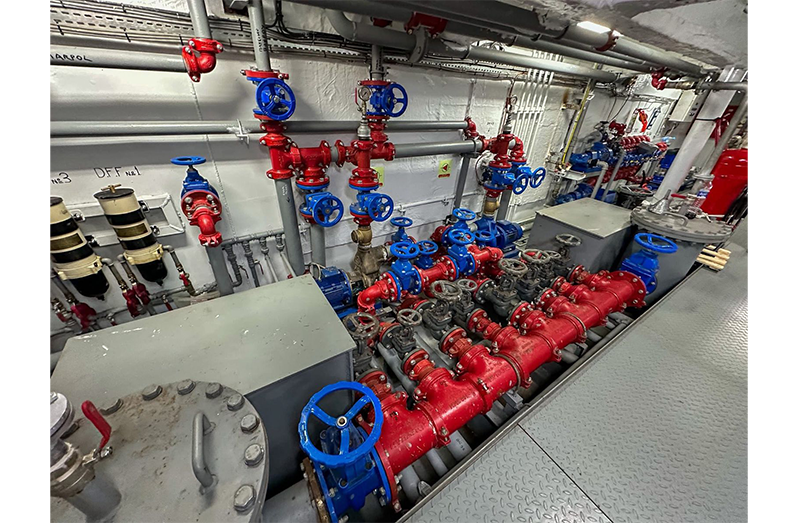
This included strengthening and pressure‑testing ballast tanks, checking and securing all sea locks, and ensuring that life‑saving appliances, navigation aids, firefighting and communication systems were fully operational.
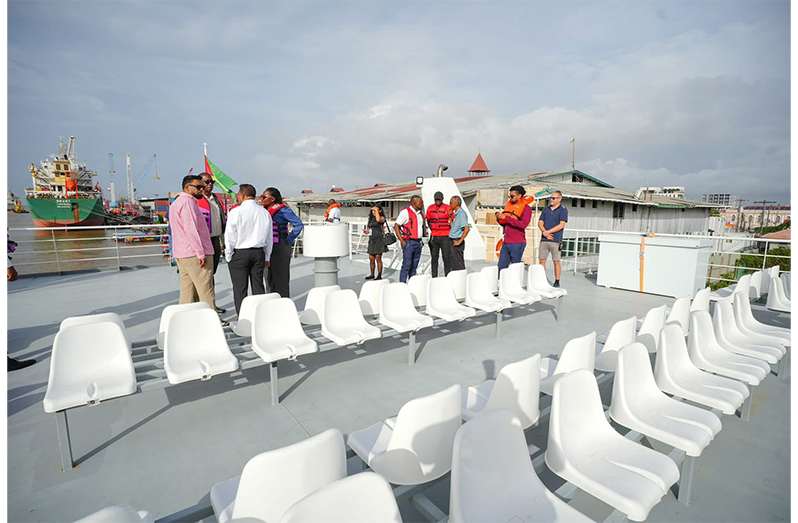
The vessel travelled approximately a 5,200‑nautical‑mile journey from Greece.
Additional fuel capacity and modifications to the roll‑on/roll‑off arrangements were undertaken so the ship could complete the 5,200‑nautical‑mile journey safely.
A specialist company, Redwise, was contracted to manage the ocean transit.
The vessel’s accommodation is fully air‑conditioned, with brand new seating, and is expected to shorten travel time significantly and improve the quality of transport in Guyana once in service.
NEW FLEET
The President also highlighted the importance of front‑door loading for the new class of vessels. Parallel investments are being made in modernising shore‑side facilities in Region One, Kingston Parika, and island locations to handle roll‑on/roll‑off operations and support the upgraded fleet.
“As you know, we’re also in the process of modernizing all our water facility to accommodate these vessels. In region one, in Kingston, Parika and, of course, in the islands. So it’s not only about the vessel, it’s also about upgrading our infrastructure.”
He praised the coordinated efforts of technical staff, including the legal team, for managing the complex contractual, regulatory and maritime law requirements that enabled the vessel’s safe and compliant delivery.
The President stressed that the arrival of the vessel is part of a broader strategy to expand and modernise Guyana’s maritime assets, enhance reliability for passengers and cargo, and strengthen the overall transport ecosystem across the country’s coastal and riverine regions.