
Challenging the hidden culture of ‘gatekeeping’ in community spaces.
IN every space, especially in the context of developmental work, I often encounter people who assume the role of “protector of standards”. It is usually long-standing volunteers, long-term employees, or managers with years of experience, with a strong position on how things ought to be. They often view these measures as necessary to uphold the organisation or group’s core values. Unfortunately, somewhere along the link, the act of “protection” or “safeguarding” can become gatekeeping. “Gatekeeping” is not specifically “spelt out” in these spaces. It is not always apparent; rather, we have to look beyond the surface to see it. It is apparent in the exclusion from certain decision-making processes, the discouragement of participation and engagement, or the deliberate red tape imposed on certain opportunities. I wanted to specifically highlight this challenge in developmental spaces because I believe it is now a deterrent to young people joining. We are seeing a decrease in young people’s participation worldwide in these spaces—from community groups, NGOs, church organisations, and even locally-based international organisations. There is often a select few in these spaces that make it particularly difficult for newcomers. We must discuss why these can be detrimental to the growth of developmental or community spaces.
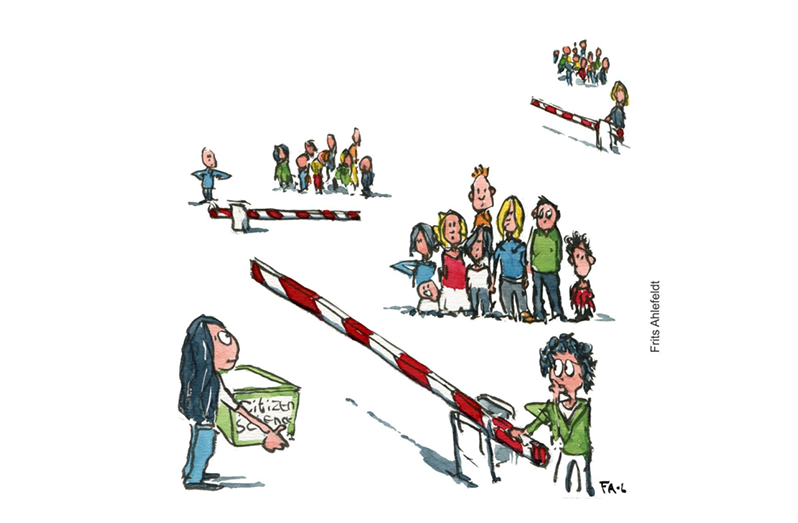
You might be wondering, where did I even get the idea that people are “gatekeeping” in these spaces? Is it just a random topic? No. I personally experienced gatekeeping, especially with generational or age gaps in certain spaces. At the time, I was unable to put a label on it. Eventually, I was able to read more about “gatekeeping” and realised I was not delusional. I recall being told I was too “green” or “inexperienced” to lend my voice to certain discussions. In fact, the younger you are, the less capable people assume you’d be in these spaces. My age felt like a burden, not a motivator, as a young professional. I was not aware of certain opportunities because older staff were deemed more “qualified” to participate in. While this is an example strictly about age gaps, there are many others in which “gatekeepers” simply want to uphold a certain standard of process within a space. I agree that there should be an upkept standard at all times. However, it shouldn’t be at the expense of other people. “Protecting” standards should not come at the cost of others being discriminated against, oppressed, disengaged, or excluded.
I believe that this culture of “protecting standards” can ultimately lead to stagnation. If things are constant, they cannot evolve into the best version of themselves. As such, these “standards” are not only at a standstill but can also be deemed outdated and inapplicable to the present day. Instead of guarding, I believe there should be room for guiding. If someone has knowledge of how specific processes work, they should be willing to share those ideas while also leaving room for discussion and suggestions. Unfortunately, most “gatekeepers” tend to keep the knowledge they know about how systems work, the various social networks within a space and other important information to themselves. People should be able to lend their voices to causes or actions without feeling intimidated or discouraged. I detest this sense of “ownership” that managers or experts have over certain spaces. Sometimes, it feels these spaces are also “closed circles” and are only “reserved” for a selected few — when that should not be. I recall wanting to volunteer in certain spaces, and I immediately felt unwelcome when I inquired further about the process to join the group because it was unclear. I knew then and there that people wanted to “close” their circle off to only those they deemed worthy of being there.
I believe it is vital for us to address “gatekeeping” in developmental spaces to ensure they remain inclusive and accessible. While I mentioned that there won’t be a signpost about “gatekeeping”, there are some general examples you can note to recognise it. Most times your ideas are dismissed before they’re even heard. You’d probably hear, “You’re too new, that’s not how we do things here”. I personally believe there’s a better way to explain standard procedures. Often, decision-making is done in small circles in closed doors. Even if the consequences of these decisions only affect you, you may not be invited to the table to speak on it when the decision is made. You might also notice that information is often withheld. Sometimes, the rules will change—what goes for one does not go for all. Or, certain opportunities, even invitations, are not shared equally. Even if specific ideas no longer serve the group’s best interests, “gatekeepers” will still cling to them. They will refuse suggestions of better ideas simply because it did not come from them—simply because it came from you.
Personally, the most important thing to consider in this discussion is whether these actions create or restrict access. If “protecting” the qualities and integrity of these spaces come at the cost of putting other people down, then I urge the “protectors” of standards to reconsider their approach. The world is changing and developmental or community spaces must adapt accordingly. I can understand that people are often afraid of the word, “change”. Change can be good, because what if these systems change for the better, with newcomers and a diverse workforce? Innovation is not a threat, criticism is not always personal, diversity should not be limited to paper, and opportunities should not be restricted—I am advocating for us to collectively do better.