THE reality of the Americas, where we are today, is mainly a consequence of the event of chattel slavery, where kingdoms in Africa disposed of tribal threats and their own internal enemies, primarily through the European slave trade. (The Arab slave trade requires a different platform of narratives to discuss.)
It must be understood that the quest for self-aggrandisement at the sacrifice of other living beings compels an embrace of darkness that suppresses all acknowledgement of common humanity. What followed the Middle Ages was a tremendous effort to cultivate an alternative mythology, distorting what was already known and ingrained through religious systems from North Africa to other parts of the continent.
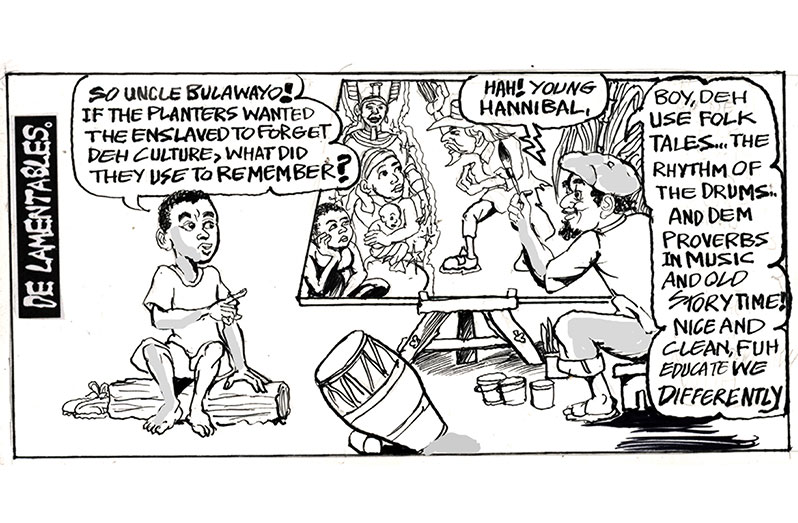 Therefore, the following becomes relevant in the pursuit of clarity:
Centuries before Europeans adopted Christianity, Africa had already been engaged in deep religious conflicts. One notable instance was the struggle between Akhenaton and the Theban priesthood in Khemet around 1350 B.C. This intense religious conflict influenced the ancient world of Khemet. It is believed that the followers of Akhenaton’s monotheistic vision of one God later formed the foundations of the biblical Hebrew nation, defying the long-established pantheon of Khemetic gods. This historical evolution outlines the connection between the Bible and its later use among enslaved Africans—who were, at the time, unaware of the added myths concocted to justify their bondage.
The reader must begin by understanding that the entire biblical narrative was written within the continent of Africa, as were the nations mentioned within it. In a follow-up article, we will discuss the nations of the Bible.
Thus, Black History Month should first serve as a space to interpret what is already known and what still needs to be uncovered about our past in order to gain a deeper understanding of today’s realities. In closing, an understanding of the biblical presence, along with an awareness of the argued diversions that were manipulated to make slavery functional and justified, should be explored further. These aspects, which were not referred to in detail here, will inevitably lead to a discussion of belief systems—whether religious or current indoctrination props—that can only exist functionally if people remain unaware of the nuanced references hidden within them.
Look out for exhibitions and invest in a book—whether from Austin’s or a second-hand bookshop—by any local or foreign writer who has researched this period in history. It will ignite the courage to explore self-awareness and defeat the reality that those who resist learning and self-exploration will fall into the trap of being misled into self-contempt.