-setbacks regions 25 by 25 food security targets, President Ali says
The Caribbean’s agriculture sector has been severely devastated by Hurricane Beryl, resulting in a setback of the region’s food security vision of reducing its food import bill by 25 per cent by 2025.
According to Guyana’s President and the Caribbean Community’s (CARICOM) chairperson Dr. Irfaan Ali, initial reporters have indicated that the sector has suffered tens of millions in losses.
“The initial assessment is heart-wrenching to our farmers to our government and to the people of these countries. It is heart-wrenching because of the tremendous investment, policy commitment and budget support that was placed in the agriculture sector since 2020,” Dr. Ali who is also the lead Head of Government with responsibility for agriculture, agricultural diversification and food security in the regions Quasi Cabinet said.
While an initial assessment of the impact of the sector is ongoing, Dr. Ali noted that there will be a ‘comprehensive’ analysis with technical and financial stakeholders.
Last week a category 4 Beryl made landfall on the islands of Barbados, Grenada, St. Vincent and the Grenadines Jamaica and several other islands.
Devastating damages to infrastructure were reported in the islands in the Grenadines islands and Grenada.
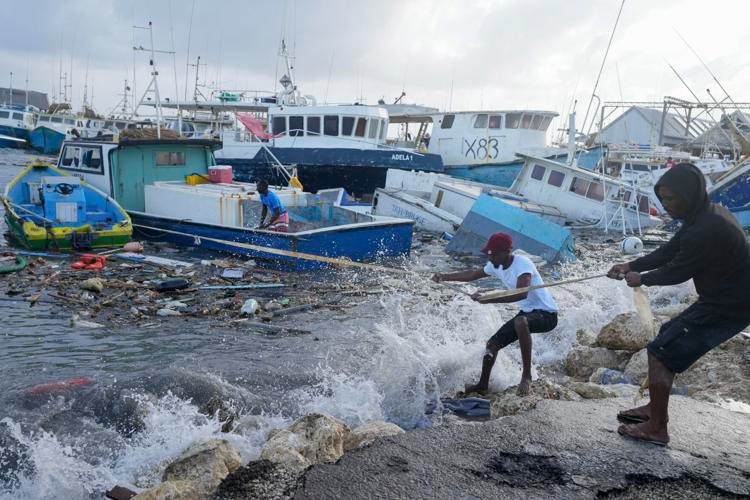
While the fishing industry in Barbados took a beating as several vessels were damaged and destroyed during the passage of the storm.
“These were all islands, that were on track mostly in achieving the 25 by 25 targets set by themselves,” President Ali said.
CARICOM has outlined several initiatives over the past years to reduce its mammoth US$6 billion food import bill.
The aim is to slash this expenditure by 25 per cent by the year 2025.
According to President Ali, there have been investments in the sectors, infrastructure, water system, technology, crop variety, farm support, farm to market infrastructure, however, many of the states would have lost these investments.
Guyana’s Agriculture Minister, Zulfikar Mustapha who is the Chairman of the Ministerial Task Force on Agriculture has been tasked to convene a strategic meeting in the new week.
It is expected that leaders will explore ideas on how the islands can rebuild, make technology available and plant quick-yielding varieties to support farmers.
In addition to this leaders will seek to address price stability and critical commodities needed.
In the meantime, the CARICOM chair has engaged with several regional and international stakeholders to discuss relief efforts.