TWO weeks ago, the Pomeroon Trading Company’s executives met the Minister of Agriculture, the Hon Zulfikar Mustapha to discuss the expansion of their coconut development project. This occasion brought to mind the extraordinarily creative activity of this able minister and secondly, development of the coconut industry.
Minister Mustapha is one of the most knowledgeable persons in agriculture in Guyana and has the commitment, skills and energy to revolutionise agriculture in Guyana. For example, as soon as he assumed office as minister, he addressed the problem of the long-owed debt by Panama of several hundreds of millions of dollars to the rice farmers.
Though the payment of this debt would have brought foreign exchange to the country, the previous administration said the contract between Panama and the rice farmers was a private one and they could not be involved. The rice farmers felt abandoned. Minister Mustapha succeeded in having Panama admit their debt with a promise to pay. Simultaneously, the minister addressed the ailing sugar and rice industries: rice production has increased and hundreds of sugar workers were again gainfully employed.
He has embarked upon the process of making GUYSUCO once again a profitable company and has been stimulating, resuscitating and reviving the other agricultural segments. He has been engaging his counterparts in other countries and the diplomatic community to try to craft mutually beneficial agreements relating to Guyana’s exports.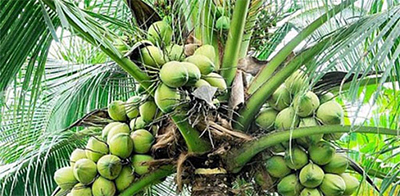
When Minister Mustapha assumed office, he pointed out that coconut was the third most important agricultural industry after sugar and rice and committed himself to develop it.
Coconut as an industry was first introduced and developed by Indian indentures. At the end of their indentureship, a few enterprising persons in all three counties rented, leased or purchased land which they put under coconut cultivation.
From their experience in India, they were well acquainted with the many uses of the coconut, which was used as a food, to make confectionery and the making of oil. Until the 1970s, most of the cooking oil consumed in the country was coconut oil. The main company which produced refined coconut cooking oil was Weiting and Richter.
The coconut estates were overwhelmingly family-owned and when the family died or retired or emigrated, coconut production contracted and this led to the importation of foreign cooking oils. Simultaneously with the importation of foreign cooking oils, a successful propaganda campaign was carried against coconut oil as being dangerous to health and demand for coconut oil diminished. It is only within the last 10 years that the truth about coconut oil began to be exposed. Now, coconut oil, among many people worldwide, is preferable to olive oil.
The demand for coconut oil is steadily growing and the industry has begun to revitalise and Pomeroon Trading Inc characterises that revitalisation. The main shareholder and investor in the company is Mr Duncan Turnbull, a Briton, who is Chief Executive Officer and Mr Jared Kissoon is his operations manager and they spoke to the media about their company:
“We started planting three years ago,” said Mr Turnbull in describing their venture. “Right now we are doing a seedling nursery.
We always start with a seedling nursery because we want to do seedlings ourselves. We want to control the quality of the seed and the health of the palms . . . we’ve been able to establish relationships with the farmers of the Pomeroon and have a team of agronomists who go around hand-selecting the seed nuts from the trees that are of the right age and have all the visible and desirable characteristics. The nuts are then cleaned, sorted and planted in the nursery”.
The Operations Manager Mr Kissoon gave further information about their project. He said they are involved in intercropping with crops such as passion fruit, bananas, turmeric and ginger. They are also cultivating the three-year dwarf variety for the production of coconut water and exploring a joint venture with a Trinidad and Tobago company to export. They are exploring the retail and export markets holistically and find the local market a good learning place. The company intends to acquire more land and establish a modern processing facility.
Minister Mustapha complimented the company on its investment so far and assured interested persons that there would soon be unveiled a plethora of new opportunities in other segments of agriculture. The coconut industry has a great future not only in oil production, the demand for which is growing exponentially, but also in its by-products.