






GUYANA has significantly increased its expenditure in tackling HIV/AIDS from 25 per cent in 2015 to 64 per cent in 2016 under the current government, improvements which the United States Agency for International Development (USAID) has labelled as “mind-boggling.”
However, it is being recommended that the private sector play “a bigger role in healthcare” as it contributes a mere 13 per cent of the total health expenditure.
This was revealed at a multipartite National Health Accounts (NHA) Dissemination Meeting held on Friday at the Cara Lodge, where several health experts met to present an overview of the country’s progress in the fight against the HIV/AIDS.
These experts included representatives from the Health and HIV/AIDS Office, USAID/Eastern and Southern Caribbean; Pan American Health Organisation/World Health Organisation (PAHO/WHO) and heads within the Ministry of Public Health.
There it was revealed that despite funding cuts from the Global Fund to fight AIDS, disbursements to meet HIV targets and objectives have increased locally by150 per cent.
In a media statement from the Ministry of Public Health, the body provided the breakdown of the state’s spending for HIV/AIDS, which stands at 62 per cent, while funding from the country’s international partners stands at 35 percent and donations from “other sources” are listed at three per cent.
Additional data provided showed that Guyana spends 52 per cent of allocations in the HIV/AIDS fight on preventative care; 21 per cent on curative care, while administrative costs are calculated at 25 per cent and capital and “other” at one per cent.
Meanwhile, the country’s private sector contributes only 13 per cent of the total health expenditures with nine per cent coming from households and four per cent from companies.
At the meeting on Friday, a document was circulated with several recommendations to combat such challenges and included calls for the private sector to increase its “meagre contribution.”
“The private sector spending is relatively low in comparison with that of other countries with similar Gross Domestic Product (GDP) per capita,” the recommendation noted, adding that the limited contributions present “an opportunity to diversify the source of funds for health and strengthen private sector involvement.”
The same document also recommended that the country develop a “credible long-term financing scenario that includes efforts to diversify funding sources and optimise resource utilisation.”
Added to this was the advice that those working on the National Health Accounts (NHA) initiative recommend that the country allocate additional funding to disease prevention, as figures show that only 19 per cent of the total health expenditure focuses on this critical area.
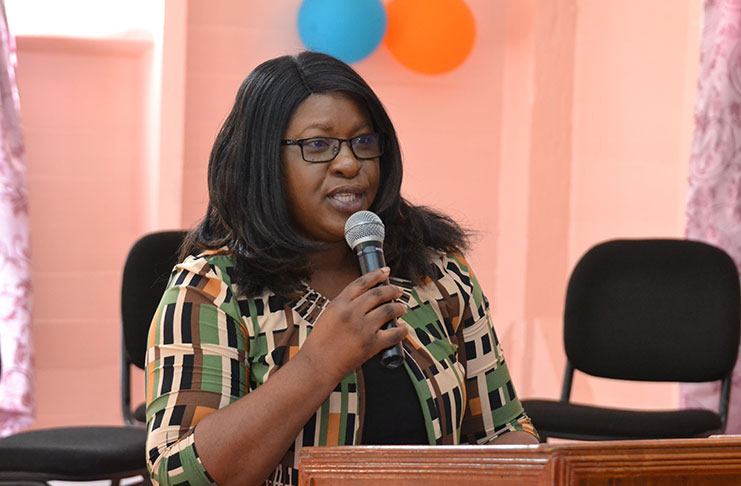
Addressing the forum, Minister within the Ministry of Public Health, Dr. Karen Cummings, spoke about the importance of the country’s NHA and its aid in decision-making. She said that the NHA must not become stagnant, but must be “periodically re-examined to determine the extent or scope of public health care and to ensure that the best concepts, data sources, and methods are being captured.
“Guyana’s health accounts will play a pivotal role in national health care policy. It will also serve as a base from which sub-accounts of expenditures useful to decision-makers can be crafted. Our health accounts will serve as a base from which projections of health expenditures can be modelled,” Minister Cummings said.
After 17 years of trying, Guyana has now joined Mexico and Nicaragua, pioneering states in the health accounts field, and several Caribbean countries to utilise this useful strategy.
Cummings has advised that the country “strategically utilise the information to promote better and targeted investments for the improvement of public health outcomes for all Guyanese.”
Also making remarks on the topic was PAHO/WHO Guyana Representative, Dr. William Adu-Krow, who referred to the NHA as “a useful monitoring and evaluation tool,” adding: “One cannot manage what one cannot measure.”
Altogether Director of the Health and HIV/AIDS Office at USAID/Eastern and Southern Caribbean Julia Henn, commended the government’s commitment to combating the deadly virus which previously presented great challenges to the country. Similar acclamations were stated within the document previously referenced, which stated that the increased budgetary spending demonstrates the government’s “commitment to implement a ‘Treat
All’ approach” among its list of strategies to combat the disease.




