Rowley urges CARICOM to get serious about Cotonou Agreement negotiations
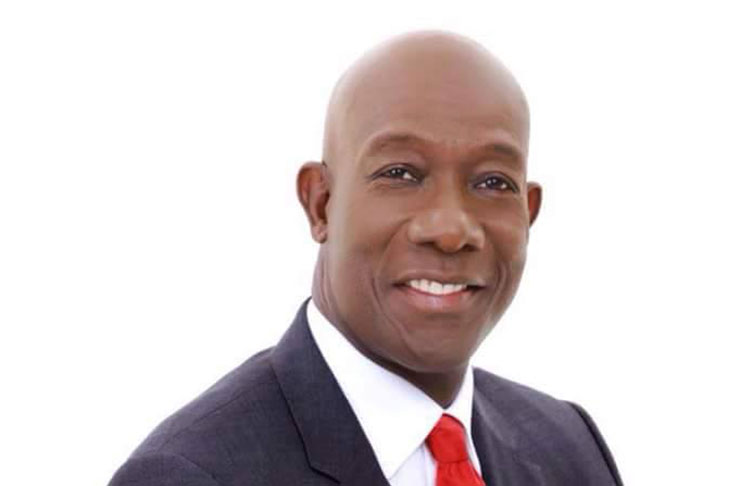
TRINIDAD and Tobago Prime Minister Dr Keith Rowley says Caribbean Community (CARICOM) countries must “get their act together now” in order to successfully negotiate a successor to the Cotonou Agreement that expires in 2020.
Rowley, who attended the 29th CARICOM Inter-Sessional summit that ended in Haiti earlier this week, told reporters here that the matter was discussed during the two-day meeting in the capital of the French-speaking CARICOM country.
The Cotonou Agreement is a treaty between the European Union and the African-Caribbean and Pacific (ACP) group that was signed in June 2000 in Cotonou, Benin’s largest city. It came into force in 2003 and was subsequently revised in 2005 and 2010. It is regarded as the most comprehensive partnership agreement between developing countries and the EU and in 2010, ACP-EU cooperation was adapted to new challenges such as climate change, food security, regional integration, state fragility and aid effectiveness.
The fundamental principles of the Cotonou Agreement include equality of partners, global participation, dialogue and regionalisation. The agreement is re-examined every five years. The communique issued at the end of the summit makes no reference to the discussion on the successor agreement, but Rowley described the situation “as a major issue that will take up a lot of our time in the coming months.
“As you know the Cotonou Agreement….is coming to an end very soon, I think it’s 2020 and the new negotiations towards the new agreement would have to take place, I think at the beginning of August this year and therefore we as a part the ACP to negotiating trade arrangements with the developed countries, we have to get our act together now and be in a position to negotiate the next trading arrangement”
He said what exists under the current Cotonou Agreement is the basis on which trade is conducted between these blocs of nations. “So to go forward beyond 2020, we have to have a new agreement which must be negotiated now,” Rowley said, adding, “it will take about two years for the negotiations to take place, so we start in August and we hope that by 2019…we can have an agreement and a new and hopefully improved agreement.
“Now if we don’t put ourselves in a position to handle this properly …we can end up living by the terms of other regions. So if we want to influence the decisions to have our requests and terms and conditions be part of the negotiations, we have to participate from now.” Rowley said “fortunately,” the Jamaica Foreign Affairs Minister Kamina Johnson-Smith is chairing one of these groupings and the CARICOM heads will be focusing very heavily on supporting Jamaica with the rest of our inputs and to put us in a position to take part in those post-Cotonou discussions.
“And that is against the background of the Brexit negotiations, which is something that we also have to bear in mind, because we are trading quite well with Europe, particularly Britain and the Brexit negotiations are ongoing at the moment would pretty much be paralleling the Cotonou negotiations and there would be considerations one way or the other for the post-Brexit. “So we have two separate sets of trading arrangements which will emerge out of the coming months. So CARICOM as a bloc, a unit have [sic] to have its act together to be able to get the best out of what comes out of these agreements.”
Rowley said that his government will make available documents pertaining to the negotiations on the website for public scrutiny. In January, ACP Secretary-General Dr P I Gomes said Caribbean countries would have to quickly develop their strategy priorities as Europe begins the process of negotiating a new, open agreement with the ACP. He told the Caribbean Media Corporation (CMC), the proposals will form the basis for the EU negotiating memorandum to be exchanged with the 79-member ACP group in May and that the negotiations would begin in Brussels over the coming weeks.
“We on our side in the ACP will be working on how we want to shape our negotiating mandate around three levels”. He said the first level would be the broad context internationally, where the ACP countries would want to see the United Nations Sustainable Development Goals (SDGs) “as the overall framework, ending poverty, gender equality, food security, ocean governance …all 17 goals as a framework which we are engaging in this agreement.
“What we are pleased about is that this is an open-ended agreement without a fixed period. So it is a political engagement between the two groups of countries. ‘We will concentrate on what we call the counterpart to their foundation, which we call our central negotiating themes …and they will deal with the issues under the SGDs, but also specifically for what our three regions will address in the ensuing agreement.” Gomes told CMC that the agreement is helpful, because the European Commission is speaking “about an EU-African compact which will be one pillar, an EU-Caribbean compact which will be a second pillar and the EU-Pacific compact which will be a third pillar. (CMC)