ESSEQUIBO Coast Businessman Deleep Singh is calling on Government to support the local dairy industry by imposing tariffs to discourage the high importation of milk.Guyana imports about 99 per cent of the milk it consumes; and this, Singh says, has been killing the local industry, as farmers find it difficult to compete with the proliferation of foreign milk and milk products on the market.

But there is some hope for local dairy farmers. Finance Minister Winston Jordon, in his 2016 budget presentation, noted Government’s intention to re-energise the cattle industry through the development of a milk pasteurisation plant.
Agriculture Minister Noel Holder had said that if a look were to be taken at Guyana’s top 10 food imports, it will be seen that ‘milk and cream’ is number one.
In 2015, Guyana imported 27 million US dollars’ worth, or 9.8 million kg, of milk. Milk imports increased 6.4 per cent in 2015 over the corresponding period in 2014, and accounted for 19 per cent of total food imports.
According to Holder, efforts will also be made to improve the dairy sector through development of a plan for acquisition of a new milk processing plant, along with re-establishment of a milk collection system. The Agriculture Ministry has already approached the Food and Agriculture Organization (FAO) for assistance to develop this initiative.
Singh, owner of a cattle ranch in the Pomeroon with over 150 head of cattle, told the Guyana Chronicle that the Government needs to accelerate its vision for the dairy industry, which has been suffering for too long, without much help.
He also reasoned that since farming is the primary occupation in Region Two, Government should examine setting up a pasteurisation plant on the Essequibo Coast, so that the dairy industry there gets a much-need boost. But, he noted, for the local industry to take off, it would require Government’s intervention/promotion in “supporting local products”.
The businessman concurred that Guyana operates in a free market economy, but said that one of the measures Government can take in support of the local dairy industry is to impose tariffs to discourage importation of dairy products.
“If this happens, the local dairy industry will grow (by) leaps and bounds, and local producers will not have to look for overseas markets, as there would be a huge market right here. Guyana has a population of about 748,000 people, and that is the market available to local dairy farmers, and it is (the) market that they should tap into, but they need Government’s help in protecting their interests,” the businessman said.
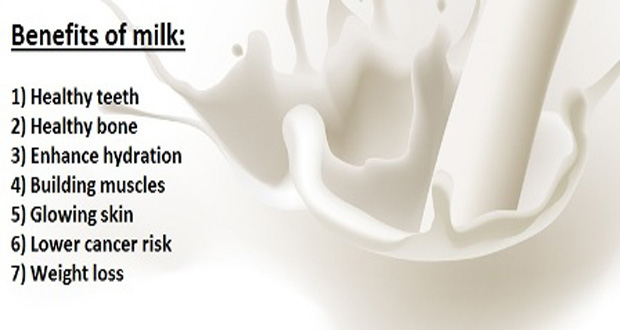
Milk increases bone density; enables a smoother skin; a stronger immune system; prevents illnesses such as hypertension, dental decay, dehydration, respiratory problems, obesity, osteoporosis, and even some forms of cancer. The beneficial health nutrients obtained from milk are essential for the human body, and help prevent a number of chronic ailments. For this reason, Singh, who is also the President of the Essequibo Chambers of Commerce, said the Government should look at introducing milk into its school feeding programmes. He pointed out that it is more nutritious than the current fruit juice being used.
“This is something that they should look at, particularly for nursery and primary school pupils. Local and fresh cow’s milk is more nutritious than the milk that we import by the tonnes every year. It will tie into the old mantra, which we haven’t fully adhered to; that is: ‘buy and support local’. This makes sound business sense, since support of the local dairy industry will enable the creation of more jobs for Guyanese, and contribute directly to the development of Guyana,” said Singh.
Singh holds a Degree in Agriculture from Louisiana State University, USA, where he specialised in dairy development.