






I WISH to reflect today on two aspects of our post-independence political culture that need to be systematically purged across our Caribbean Community in favour of cultivating attitudes and improving decision-making for more civilised, healthy, productive norms in nation building:
 I make no pretence at being profound; but to simply share with readers my own continuing disappointment and distress over examples such as the inclination to feed perspectives and attitudes that perpetuate negative and divisive tendencies in preference to what’s positive, creative and what unites us.
Secondly, as an extension of such negative attitudes, there prevails a virtual institutionalised practice by parties of changing governments to ignore the talents and expertise of citizens simply on partisan assumptions about their political/cultural preferences—even as such administrations keep stumbling over multiple but avoidable problems.
Consequently, half a century after the dawn of political independence in Trinidad and Tobago, perhaps the most cosmopolitan of Caribbean Community states which—with others in this region constitute a microcosm of the world’s multi-ethnic, cultural nations—it is painful to note the fixation by some with racial and religious divisions, instead of celebrating our unity in diversity.
Let me hasten to add that varying dimensions of this challenging situation are located in other CARICOM states. But the mirror image to Trinidad and Tobago is easily identified in Guyana, where, as in that twin-island state, lofty national mottos point to what we have in common and what should unite rather than divide us.
In this context, perhaps the time has come for some of our better known scholars/intellectuals and social commentators, who seem obsessed with the ethnic factor in governance, to spare us their tortuous offerings about perceived ethnic politics that mock what’s “good governance”—particularly in media analyses sadly lacking in facts.
Politicians and parties generally exploit ethnic and religious divisions in multi-racial societies for electoral advantages. But when those who would like to be respected as scholars/intellectuals seek to challenge such politics, they must endeavour to avoid the contempt politicians and parties—ruling and opposition—so often display.
National Mottos
Both in Guyana and Trinidad and Tobago, with their respective national motto—“One People, One Nation One Destiny” and “Together We Aspire, Together We Achieve”, the citizens at large have survived recurring social, political and economic problems to admirably demonstrate their unity in diversity for preservation of national cohesion and security.
Those familiar with the demographic profile of both countries would be aware that neither of the traditional dominant political parties —PPP and PNC in Guyana, nor the PNM and UNC in Trinidad and Tobago— can win free and fair general elections solely on the basis of majority ethnic-based votes.
The ethnic crossings have been systematically occurring, but too often ignored for commendation by those with a curious passion to elevate the negative and therefore, the constant ethnic ‘head-count’ exercises.
For their part, politicians and parties that feel obligated to put ethnic consideration above what’s correct, and nationally required, in the interest of good governance, will continue to reveal failure to distinguish between the trees and the forest!
A Lingering problem
This lingering aspect of our post-independence political culture will continue to frustrate a lived reality of lofty national mottos by the refusal by governments, everywhere, to reach out to the best among us for ensuring good governance in a democratic state where competence, expertise and integrity must trounce decisions based on ethnic or religious consideration.
With this in mind, and surprising as it may seem for some, this past Tuesday’s ‘Trinidad Express’ lead story titled, “Poor Protocol”, has served as a reminder for this columnist why every government of a democratic state must be vigilant for the recruitment of best possible talents and expertise in the service of good governance—and not merely to avoid unnecessary embarrassment.
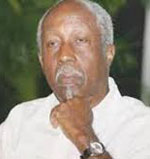
The sadness expressed by Reginald Dumas over embarrassing protocol errors for the historic visit by China’s President Xi Jinping and First Lady Peng Liyuan, is understandable.
It ought to be appropriately received as coming from a son of the soil who had long distinguished himself in the service of Trinidad and Tobago, under different administrations in Port-of-Spain. It would be a pity to view it otherwise.
Dumas, who it has been my good fortune to know in pursuit of my work as a Caribbean journalist, continues to perform, in his retirement, an admirable public education service by often sharing his views, via the media—when not participating in public fora on a variety of issues of national relevance and importance.
His intervention, by invitation, on the protocol lapses for President Xi’s visit, is merely the latest. Those who know him better than I do, may concur that not only on matters of diplomacy, international relations and good governance, but certainly also in regional air transportation, Reginald Dumas would have much advice to offer to any government or corporation willing to benefit from his knowledge.




